Housing Society AC Maintenance: A Coordination Guide
Common-area units, member discounts, shared drain risers and access rules — the four things that decide whether a society AC plan works.
A housing society sits between two markets: it has commercial-scale equipment in its lobbies, gyms and community halls, but its members are households. That mix creates specific coordination problems — who pays, who has access, and who is responsible when water from one flat damages another. This guide covers the practical arrangements that work.
Separate the two scopes
Start by drawing a line between society equipment and member equipment.
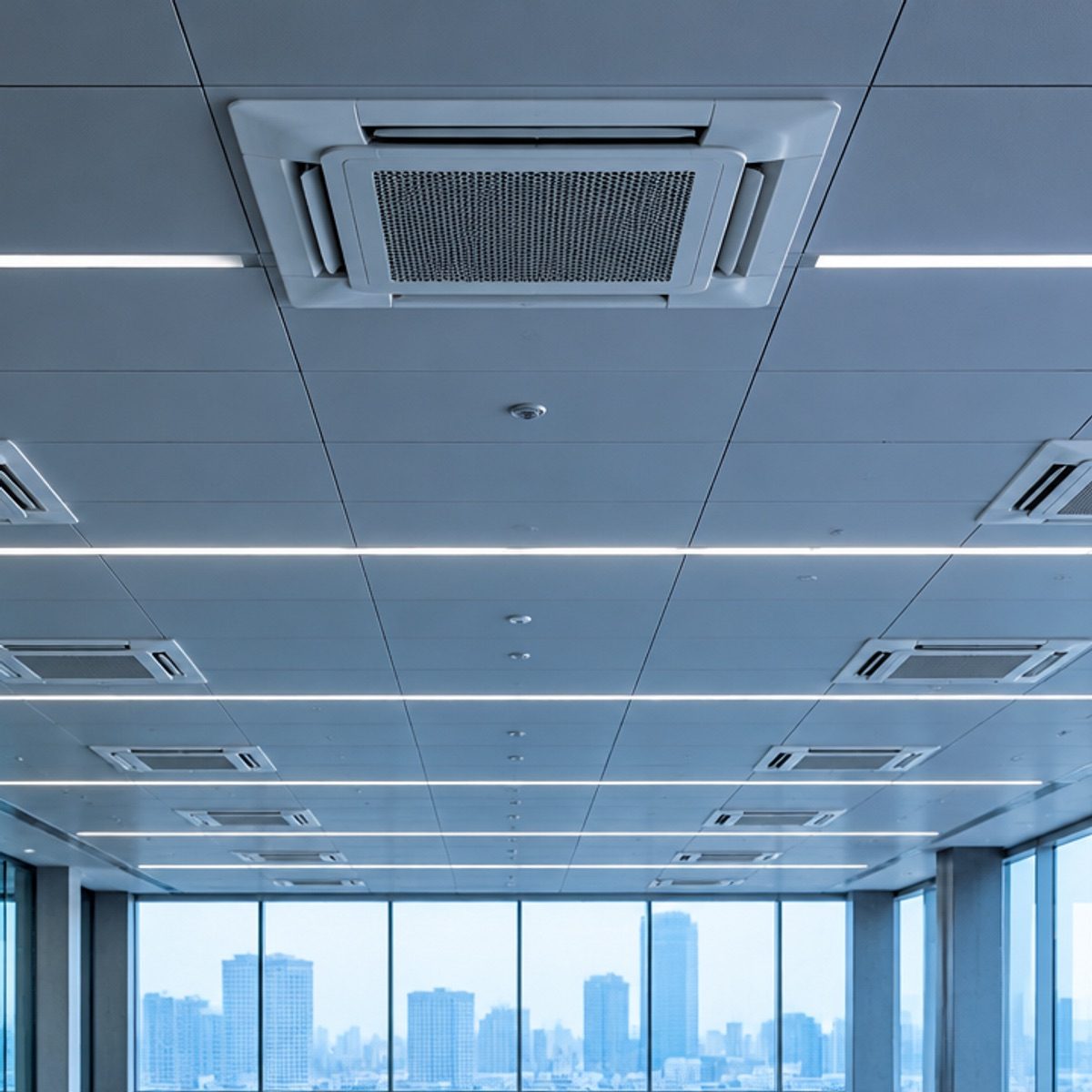
Society scope: lobby and reception units, gym and clubhouse, community hall, security cabin, lift lobby units, and any AC serving a common area. These belong in a commercial-style AMC with a visit count and a response time.
Member scope: everything inside individual flats. A society contract should not absorb these, because it makes the cost unpredictable and creates arguments about whose unit used more visits.
A common and workable middle path is a negotiated member rate: the society contracts the provider for common areas, and members get a fixed published price for their own units, billed individually. Both sides gain — the provider gets cluster density, and members get a known rate with no minimum call-out games.
The drain riser problem
Nothing generates society complaints faster than water. Two separate issues get confused.
Individual drain blockage. A flat's indoor drain pipe clogs and overflows inside that flat. The fix is a drain flush, which is the flat's responsibility.
Shared riser backflow. Where multiple units discharge into a common vertical pipe, a blockage above can push water back into units below. The water appears in a flat that did nothing wrong.
Inspect the riser annually, ideally before monsoon. A camera or simple flush test at the top and bottom tells you whether the line is clear. Where the design permits, individual drip trays and non-return arrangements reduce the damage a blockage causes. This is a plumbing conversation, not an AC one, but it starts with the AC contractor's report.
Access, keys and NOCs
Servicing a society fleet means entering flats, terraces and shafts. Agree the rules once:
- A standard notice period — 48 hours for scheduled visits, immediately for a leak.
- Who holds keys for the terrace and plant areas, and during what hours.
- Whether the technician must be escorted in common areas.
- How a member books their own unit under the negotiated rate, and who authorises it.
Put this in a one-page annexure to the contract. Every unresolved access question turns into a wasted visit, and a wasted visit is charged to somebody.
Sizing the common-area contract
Count the units properly and weight them by usage. A gym unit running fourteen hours a day needs more visits than a lobby unit running six.
| Area | Typical usage | Suggested visits/year |
|---|---|---|
| Lobby / reception | 8–12 h/day | 3 |
| Clubhouse or hall | Intermittent, seasonal | 2 |
| Gym | 12–16 h/day | 4 |
| Security cabin | 24 h/day | 4 |
| Community office | 6–8 h/day | 2 |
A flat rate per unit regardless of usage always ends in argument — the gym over-uses and the lobby under-uses. Weighted counts settle it before the year starts.
What the committee should review
Three documents keep the arrangement honest: a per-unit service sheet signed on each visit, a monthly summary of complaints raised and closed, and an annual condition note listing units approaching replacement.
Review them at committee level every quarter, briefly. The point is not oversight for its own sake — it is to catch the pattern where the same unit is attended three times and nobody has asked why.
Also agree in advance what happens when a common-area unit reaches end of life. A twenty-year-old lobby unit may cost more to keep contracted than to replace; having a replacement threshold decided beforehand avoids a mid-summer emergency purchase at retail price.
The communication piece
Most society dissatisfaction is about information, not workmanship. Members notice a technician on the terrace and assume something is wrong.
Publish the schedule: which dates, which areas, and how long each will be out of service. Post a notice in the lobby and on the society group a week ahead. When a member's unit is attended, leave the service sheet with them.
Do the same for complaints: a reference number and a stated response window. A society that knows a leak will be attended within four hours complains far less than one that has been told “we will send someone”.
None of this is expensive. It is the difference between a contract that renews quietly and one that becomes an agenda item every month.

Key takeaways
- Split society equipment from member equipment before pricing anything.
- A negotiated member rate is usually better than either extreme.
- Inspect shared drain risers annually — backflow is the classic dispute.
- Weight visit counts by usage, not by unit count.
- Publish the schedule and give complaints a reference number.
Frequently asked questions
Should a housing society take an AMC for common-area ACs?
Yes, where there are three or more common units. A contract fixes visit counts and response time, which ad-hoc calls never do.
Can members get a discounted rate through the society?
Often yes. Cluster density lowers travel cost, so providers can offer a fixed rate — billed to the member, not the society.
Who pays when a shared drain backs up into a flat?
Usually the society, since the riser is common property. The first step is an inspection to confirm the blockage is in the shared line rather than the flat’s own pipe.
Transparent pricing
Featured AC services and rates
Published rates straight from the AK Aircon Services rate card — 13 categories covering service, installation, gas charging, repair, parts and material.
| Service | Split AC | Window AC |
|---|---|---|
| Dry / Lite service | ₹399 | ₹399 |
| Standard jet service | ₹549 | ₹549 |
| Foam jet service | ₹649 | ₹649 |
| Deep dismantle service | ₹1,349 | — |
| Inspection / diagnosis visit | ₹299 | — |
| Gas charging | ₹2,499 | — |
| Leakage repair | ₹1,499 | — |
| Standard installation | ₹1,499 | ₹1,499 |
| Uninstallation | ₹899 | ₹899 |
| Indoor unit shifting | ₹1,299 | — |
| PCB / electrical repair | ₹1,799 | — |
| Compressor replacement | ₹6,499 | — |
| Copper pipe (per metre) | ₹550 | ₹550 |
Prices include labour and material unless a note states otherwise. Installation material is extra. Units above 2.2 tons are quoted individually.
Need a specific price?
Tell us the unit type and the service. We confirm the exact charge before work starts.
See all 13 categoriesRates are transcribed from the AK Aircon Services rate card. Charges for unusual site conditions or non-standard equipment are confirmed before work begins.