
Copper Piping Mistakes That Cause Most AC Failures
The pipe run is buried in a wall and forgotten. It is also where most repeat faults originate, and every one of them was avoidable on installation day.
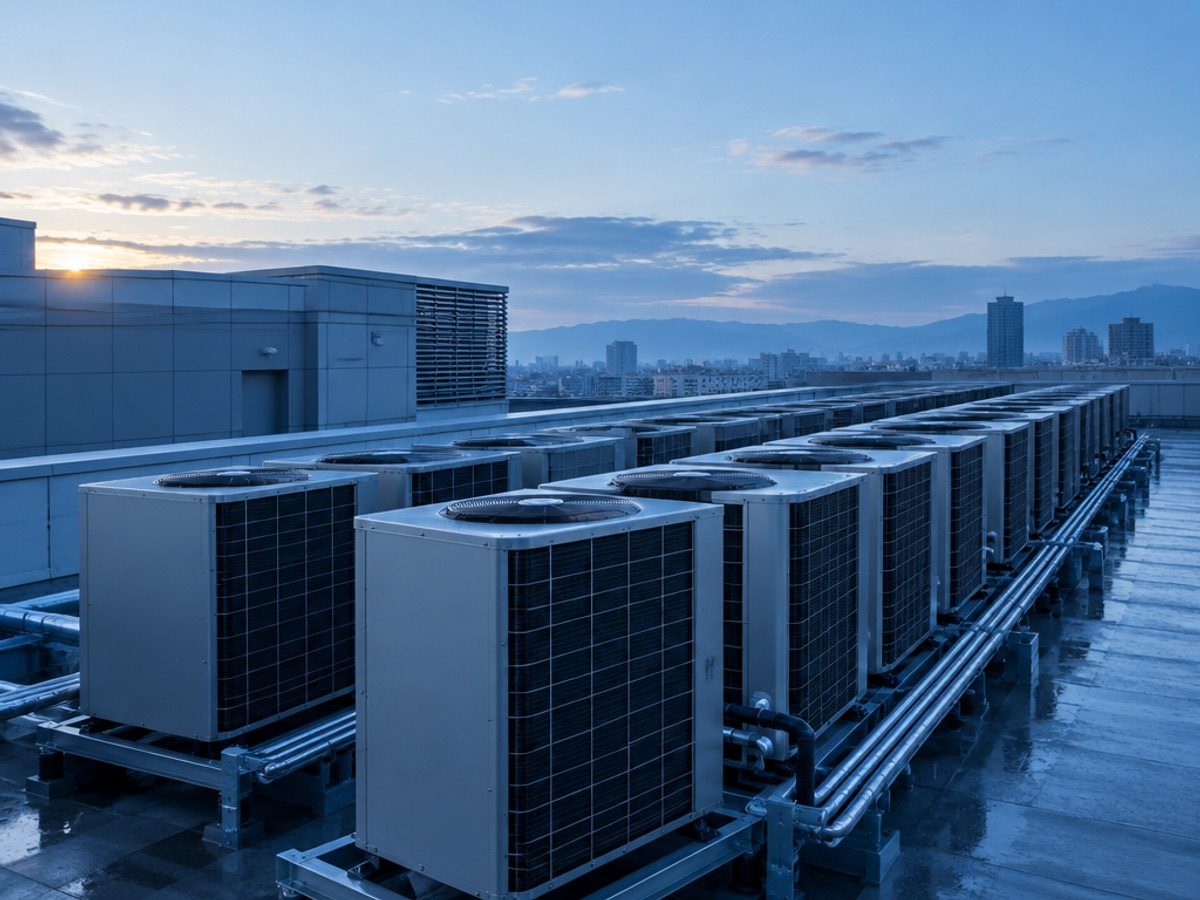
A split AC is two boxes joined by a pipe run, and the pipe run is the only part nobody looks at again. It is also where the majority of repeat faults live: slow leaks, lost capacity, compressor oil starvation. None of these show up on day one.
Pipe diameter is not interchangeable
Manufacturers specify a liquid line and a suction line diameter for each capacity — typically 1/4 inch and 3/8 inch for a 1-ton, and 1/4 inch and 1/2 inch for a 1.5- or 2-ton unit. Installers who run a single 3/8 inch line for everything are saving on materials and costing you capacity.
An undersized suction line causes a pressure drop along the run, which the compressor reads as a lower load. The unit cools, but never at its rated output, and the compressor runs longer to compensate. It is the quietest way to lose 10–15% of a machine you paid for.
Insulation gaps cause more than condensation
Every metre of suction line must be insulated, including the part behind the indoor unit and the last stretch at the outdoor unit. Two specific failure points we see constantly: the flare joint at each end left bare, and the section where the pipe clips to the wall crushed flat.
Bare pipe sweats. Water runs down it, into the wall, and out somewhere it should not. In monsoon it drips onto the sill. In a Thane high-rise it reaches the flat below — which is how a piping defect becomes a complaint from a neighbour.
Bad flares are the number one leak source
A flare joint is a copper cone compressed onto a brass fitting. Done well it lasts a decade. Done badly it leaks within a season, and the leak is slow enough to hide behind "it still cools, mostly".
Three things make a flare good: the cut is square, the end is deburred, and the torque is correct rather than "tight". A technician who tightens by feel alone will sometimes crush the cone and sometimes under-tighten it. Neither is visible afterwards without a leak test.
This is why we pressure test and hold vacuum on every installation. Fifteen minutes of checking prevents a return visit in April.
Long runs need oil return, not just more gas
Compressor oil travels with the refrigerant. On a run beyond about seven metres, oil can pool in the low points of the suction line and stay there, leaving the compressor to run on less lubricant than it needs.
The fix is a proper route: a slight continuous fall toward the outdoor unit, a trap at the base of any vertical rise, and no unnecessary U-bends. Installing a long run "because the outdoor unit had to go around the corner" without those details is how a compressor fails at year four on a unit that was never abused.
Brazing without nitrogen
When copper is brazed in air, the inside of the pipe oxidises and forms black scale. That scale flakes off and travels through the system, where it blocks the capillary tube or the expansion valve and scores the compressor.
The correct method is to flow nitrogen through the pipe while brazing so the interior stays oxygen-free. It costs the installer a cylinder and a few minutes. Ask whether it was done — and if the answer is a blank look, ask what the filter drier looked like on the last service.
Reusing old pipe on a replacement
When a unit is replaced, the temptation is to keep the existing pipe run. Sometimes that is fine: the diameters match, the insulation is sound, and the run is under five metres.
Often it is not. Old pipe holds old oil, which may be incompatible with the new refrigerant, and old flare ends have already been compressed once. Pressure testing the old run before reuse is the minimum; replacing anything under seven metres is usually cheaper than the second visit.
What to ask for on installation day
Five questions, all answerable on the spot: what diameter is each line, was the run vacuumed and for how long, was nitrogen used for brazing, what is the total pipe length, and how much refrigerant was added for the extra length.
Write the answers on the commissioning sheet. They are the difference between a warranty claim that gets honoured and one that gets argued.
Key takeaways
- Undersized suction line quietly costs 10–15% of rated capacity.
- Bare or crushed insulation sends condensate into walls and ceilings.
- Bad flares are the leading cause of slow refrigerant leaks.
- Runs beyond seven metres need oil-return routing, not just extra gas.
- Brazing without nitrogen leaves scale that damages the compressor.
Frequently asked questions
Can I reuse the old copper pipe when replacing an AC?
Only if the diameters match the new unit, the run is short, and it holds pressure. Old pipe carries old oil, and used flare ends are already compressed. Under seven metres, replacing it is usually cheaper.
How long can a split AC pipe run be?
Most residential splits are specified up to 15 metres, but performance and oil return degrade beyond seven or eight. Longer runs need added refrigerant by weight and careful routing.
Why does water drip from the pipe outside?
Missing or crushed insulation on the suction line. The pipe is colder than the dew point, so it sweats. It should be fully insulated along its entire length, including both flare ends.
Transparent pricing
Featured AC services and rates
Published rates straight from the AK Aircon Services rate card — 13 categories covering service, installation, gas charging, repair, parts and material.
| Service | Split AC | Window AC |
|---|---|---|
| Dry / Lite service | ₹399 | ₹399 |
| Standard jet service | ₹549 | ₹549 |
| Foam jet service | ₹649 | ₹649 |
| Deep dismantle service | ₹1,349 | — |
| Inspection / diagnosis visit | ₹299 | — |
| Gas charging | ₹2,499 | — |
| Leakage repair | ₹1,499 | — |
| Standard installation | ₹1,499 | ₹1,499 |
| Uninstallation | ₹899 | ₹899 |
| Indoor unit shifting | ₹1,299 | — |
| PCB / electrical repair | ₹1,799 | — |
| Compressor replacement | ₹6,499 | — |
| Copper pipe (per metre) | ₹550 | ₹550 |
Prices include labour and material unless a note states otherwise. Installation material is extra. Units above 2.2 tons are quoted individually.
Need a specific price?
Tell us the unit type and the service. We confirm the exact charge before work starts.
See all 13 categoriesRates are transcribed from the AK Aircon Services rate card. Charges for unusual site conditions or non-standard equipment are confirmed before work begins.