
Packing a TV, Fridge and Washing Machine for a Move
Three appliances cause most transit damage, and all three have a fixed procedure. Follow the sequence and settling times and they arrive working.
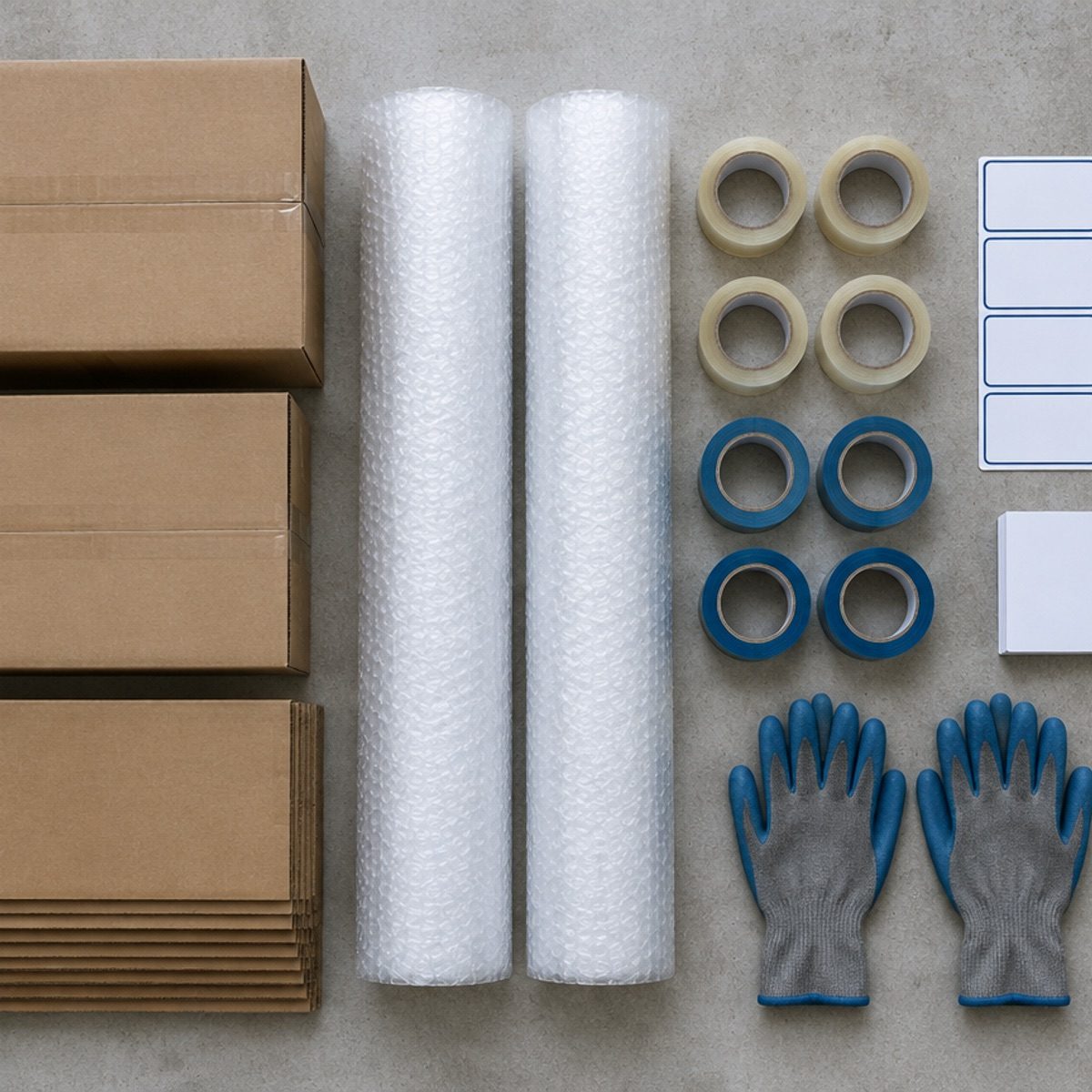
Furniture survives most moves. Appliances do not, because they combine weight, glass, internal moving parts and — in two cases — fluid systems that must be handled in a specific order. This guide covers the three that go wrong most often: the television, the refrigerator and the washing machine.
Before anything: the shared rules
Three rules apply to every appliance.
Photograph it working. A photo of the screen on, the fridge cooling, or the machine mid-cycle is your evidence if a dispute arises. Thirty seconds now saves an argument later.
Disconnect properly. Switch off at the socket, unplug, and for anything plumbed, close the supply valve before disconnecting. Keep screws, brackets and manuals in a labelled bag taped to the appliance.
Empty and dry. Nothing travels with water, ice or loose contents inside. Moisture inside a wrapped appliance during a monsoon move is how mould and electrical faults begin.
The television
TVs fail in transit for one reason: flex. A panel that bends even slightly can crack internally without visible damage to the casing.
- Detach the stand or wall bracket and pack the screws separately.
- If the original box and foam exist, use them. Nothing else protects as well.
- Otherwise: screen-face protection first — a soft cloth, then two layers of bubble wrap, bubbles facing outward so they do not press into the panel.
- Stand the TV upright in a rigid carton with foam or folded blankets at all four corners, and fill voids so it cannot shift.
- Label “FRAGILE — THIS SIDE UP” and, critically, never lay a TV flat. Flat stacking puts the panel's weight across its weakest axis.
In the truck, it travels upright against a wall, never under anything.
The refrigerator
A fridge is heavy, has a compressor mounted on springs, and holds refrigerant and oil that must settle after the move.
- Empty it completely, including the freezer, and defrost at least 24 hours before the move.
- Clean and dry the interior, and leave the doors slightly open for a day so no moisture is trapped.
- Tape the doors shut and secure the shelves and drawers with paper or cloth so they cannot slide.
- Coil the power cord and tape it to the back — never to the front panel.
- Move it upright. If it must be tilted for a doorway, do not exceed about 45 degrees, and never lay it on its side for long.
After the move, wait. Let it stand upright for at least four hours — longer if it was tilted — before switching on. This lets the compressor oil drain back where it belongs. Plugging in immediately is the most common cause of a compressor that fails weeks later.
The washing machine
A front-load machine has a concrete counterweight and a drum on suspension; a top-load has a gearbox and a fragile control panel. Both need preparation.
- Disconnect water inlet hoses and the drain hose, drain them fully, and keep the hoses in a bag with the machine.
- Drain the pump filter — there is usually a small access panel at the front. Expect water.
- Fit transit bolts. New machines ship with them; if yours are lost, the drum must be braced with foam or the original packing, otherwise suspension damage is likely.
- Tape the lid or door shut and secure the control panel edge with foam.
- Travel upright, strapped, never on its side.
After arrival, remove the transit bolts before the first wash — running with them in will damage the drum mountings.
Smaller appliances worth ten minutes
The same logic scales down.
- Microwave: remove the glass turntable and pack it separately, flat. Tape the door.
- Air conditioner: do not pack it — uninstall it properly with a gas pump-down, and reinstall at the destination.
- Water purifier: remove and drain filters, and keep the membrane upright.
- Mixer, induction plate, small electronics: original boxes if available; otherwise one layer of bubble wrap and a rigid carton.
Small items are where volume balloons. Consolidating them into a few well-padded cartons, each labelled by room, saves both space and unpacking time.
Loading order in the truck
Appliances load first, against the cabin wall, so nothing presses on them.
Sequence: refrigerator upright at the front, washing machine beside it strapped, then large furniture, then cartons, then mattresses and the television last, upright and braced so it cannot fall forward.
Never place cartons on top of the fridge or the television. Both are designed to carry load downward through their base, not through a panel.
If the truck has no lashing points, ask for straps or ropes. A load that shifts on a turn is how most damage happens — not from the packing, but from movement.
The first 24 hours at the new place
Unpack appliances before furniture. They are the items that need settling time, and starting that clock early means you can use them the same evening.
Order: fridge upright and untouched for four hours, washing machine with transit bolts removed and hoses reconnected, television mounted or placed only after the room is clear of moving traffic.
Test each one before the day ends: fridge cooling within an hour, washing machine on a short rinse cycle, TV on for ten minutes. Reporting a fault the same day is straightforward. Reporting it a week later is a conversation about what happened after delivery.

Key takeaways
- Never lay a television flat — upright and braced, always.
- Defrost a fridge 24 hours ahead and let it stand 4 hours before switching on.
- Fit washing machine transit bolts or brace the drum.
- Photograph every appliance working before packing.
- Load appliances first, against the cabin wall, with nothing on top.
Frequently asked questions
How long should a fridge stand after moving?
At least four hours upright, longer if it was tilted. This allows compressor oil to settle before the unit runs.
Can a washing machine be moved on its side?
It should travel upright. If tilted, drain it fully and brace the drum; on its side the suspension and counterweight mountings take stress.
Is it safe to move a TV without the original box?
Yes, with a rigid carton, corner protection and upright transport. The original packaging is still the best option if you kept it.
Transparent pricing
Featured AC services and rates
Published rates straight from the AK Aircon Services rate card — 13 categories covering service, installation, gas charging, repair, parts and material.
| Service | Split AC | Window AC |
|---|---|---|
| Dry / Lite service | ₹399 | ₹399 |
| Standard jet service | ₹549 | ₹549 |
| Foam jet service | ₹649 | ₹649 |
| Deep dismantle service | ₹1,349 | — |
| Inspection / diagnosis visit | ₹299 | — |
| Gas charging | ₹2,499 | — |
| Leakage repair | ₹1,499 | — |
| Standard installation | ₹1,499 | ₹1,499 |
| Uninstallation | ₹899 | ₹899 |
| Indoor unit shifting | ₹1,299 | — |
| PCB / electrical repair | ₹1,799 | — |
| Compressor replacement | ₹6,499 | — |
| Copper pipe (per metre) | ₹550 | ₹550 |
Prices include labour and material unless a note states otherwise. Installation material is extra. Units above 2.2 tons are quoted individually.
Need a specific price?
Tell us the unit type and the service. We confirm the exact charge before work starts.
See all 13 categoriesRates are transcribed from the AK Aircon Services rate card. Charges for unusual site conditions or non-standard equipment are confirmed before work begins.