
Moving House During the Monsoon: A Practical Protection Plan
June to September moves are possible — they just need different packing, different timing and a plan for the twenty metres between the door and the truck.

Most people try to avoid a monsoon move. In practice, thousands happen every year between June and September in the Mumbai region, often because a lease ends when it ends. The move can be perfectly safe; what changes is the packing material, the schedule, and how much attention goes to the part nobody thinks about — the walk from the front door to the vehicle.
Why the doorway matters more than the road
Water damage rarely happens because a truck was open on the highway. It happens in the two minutes a carton sits on a wet landing, or when a stack of boxes is loaded during a drizzle and the bottom layer soaks on the way up the ramp.
So the plan should focus on the exposure window: the route from inside the flat to inside the truck. Three things matter: cover, speed and staging.
Cover: plastic sheeting over the load area, tarpaulin over the ramp, a covered walkway if the compound allows. Speed: stage cartons near the door inside the flat, so the carry is one continuous pass rather than repeated trips through the corridor. Staging: keep the truck backed close, and never stack cartons on the ground outside.
Packing material that actually resists water
Standard cartons absorb water and lose strength quickly — a wet cardboard box fails at the corners first. For a monsoon move, upgrade the material:
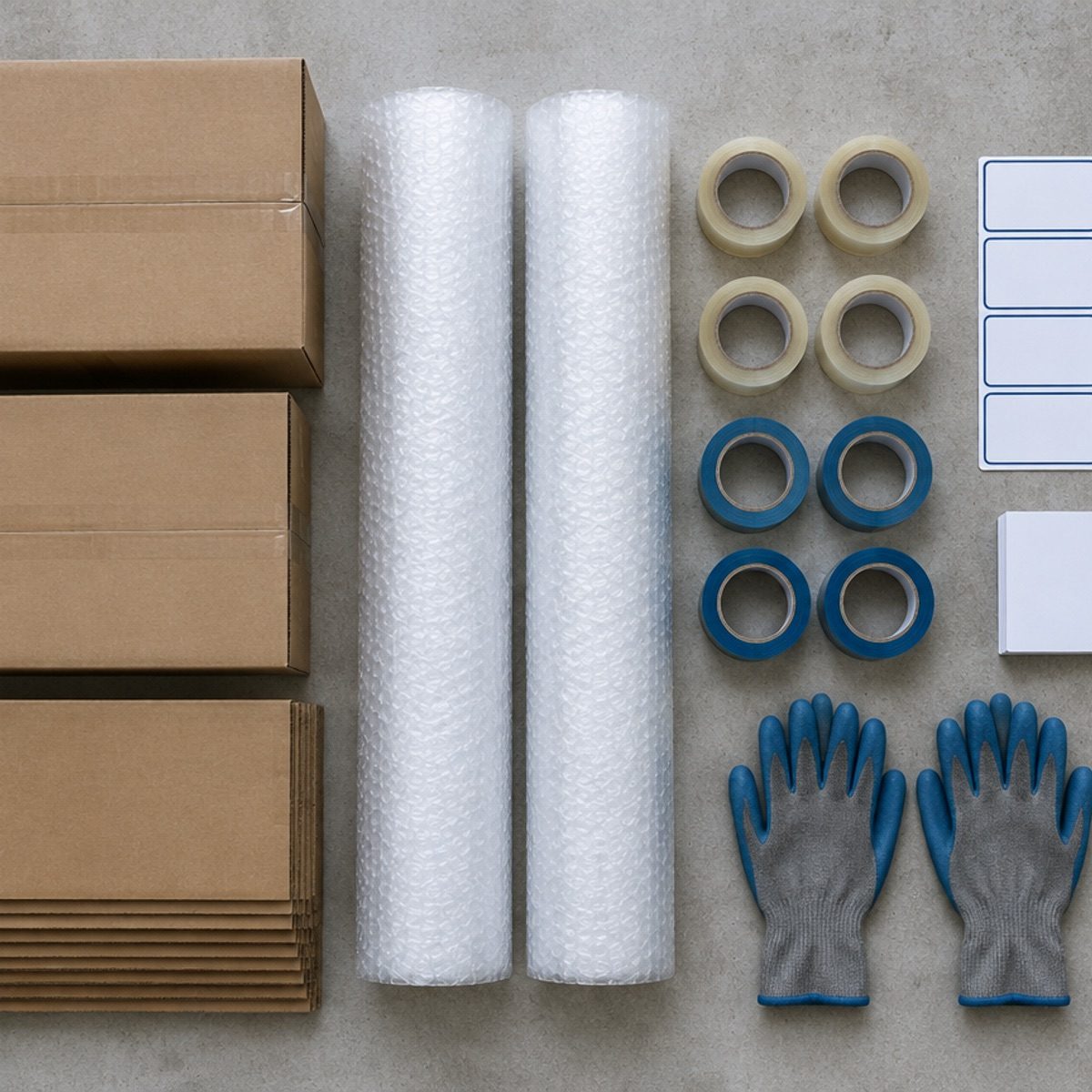
- Waterproof or laminated cartons where available; otherwise line each carton with a plastic bag before filling.
- Stretch film over the closed carton, wrapping the top edges especially.
- Plastic crates for items that cannot tolerate any moisture: documents, electronics, photographs.
- Pallet or dunnage: keep cartons off the truck floor, which collects water.
Documents deserve special treatment. A folder of property papers that gets damp is a problem that lasts months. Carry them yourself, in a bag, and keep them with you rather than in the truck.
Clothing, mattresses and fabric
Fabric is the silent casualty of a wet move. It does not fail immediately — it develops a smell two weeks later and mould in a month.
Mattresses should be bagged, not just wrapped. Clothing should be packed dry, in vacuum bags where possible, with a moisture absorber sachet in each carton. Sofas and upholstered chairs get stretch film plus a plastic cover, and should never be loaded against a truck wall that might be damp.
Curtains and bedding should be washed and dried before packing. Packing slightly damp fabric into a sealed carton for a day is enough to start a smell that is very hard to remove afterwards.
Appliances in humid weather
Humidity is as much an issue as rain. An appliance packed while damp, then sealed for a day in a humid truck, arrives with condensation inside its casing.
Refrigerator: defrost, drain and dry for 24 hours, then leave the doors slightly open until an hour before loading. Washing machine: drain the pump filter, dry the drum, and leave the door ajar until loading. Television: allow it to reach room temperature before wrapping if it has been in an air-conditioned room and is moving to a humid space — condensation on a cold panel is a real risk.
After the move, do not switch anything on immediately. Let appliances stand, dry and settle as the normal settling times recommend, and wipe any visible moisture before powering up.
Choosing the day and the hour
Weather is the one variable you can partly work around.
Watch the radar the evening before rather than the forecast a week out. In Mumbai, a heavy morning band often clears by early afternoon, and a two-hour shift in start time can mean a dry load.
Avoid loading during peak downpour, and avoid the classic mistake of starting late and loading in the dark. Load in daylight, even if it means starting at 7 am.
If a genuinely severe spell coincides with your date, ask the provider about rescheduling. Most will move a booking at short notice for weather; a lost half-day is cheaper than soaked goods and a claim.
The new flat needs preparing too
People prepare the packing and forget the destination. Before the truck arrives:
- Check for leaks in the new flat, especially near windows, the bathroom and any wall that has fresh paint.
- Confirm the electricity connection is live so you can run a fan, lights and, later, the appliances.
- Have floor mats or newspapers at the entrance, and a dry area designated for cartons.
- Keep the ACs serviced before the move in — a damp flat with a mouldy indoor unit is a bad start.
If the new building has an open corridor or a wet lobby, ask the society about covered access. A one-minute conversation can save the bottom layer of every carton.
If something does get wet
Act within the hour.
Open the carton, remove the contents, and spread fabric and paper in a dry room with a fan. Electronics should be left off and allowed to dry completely — at least 48 hours — before any attempt to power them. Do not use a hairdryer; heat warps panels and drives moisture deeper.
Photograph everything before moving it, and report it to the provider the same day, noting it on the completion sheet at delivery. Most damage clauses require notification within 24 hours.
Finally, note what was in the affected cartons on your inventory list. That list, the photographs and the completion sheet are what turn a wet box into a handled claim rather than a dispute.
Key takeaways
- Most monsoon damage happens between the door and the truck.
- Line cartons with plastic and wrap the closed box in stretch film.
- Bag mattresses and pack fabric bone-dry with moisture absorbers.
- Load in daylight and shift the start time around rain bands.
- Report any water damage the same day and note it on the completion sheet.
Frequently asked questions
Is it safe to move during the monsoon?
Yes, with waterproof packing and a covered loading route. The main risks are the doorway exposure and damp fabric, both of which are manageable with preparation.
Can I reschedule a move because of heavy rain?
Most providers will reschedule for severe weather at short notice. Ask the evening before rather than on the morning of the move.
What should I do if my electronics get wet?
Keep them switched off, do not use heat to dry them, and let them air-dry for at least 48 hours before testing. Photograph and report the damage the same day.
Transparent pricing
Featured AC services and rates
Published rates straight from the AK Aircon Services rate card — 13 categories covering service, installation, gas charging, repair, parts and material.
| Service | Split AC | Window AC |
|---|---|---|
| Dry / Lite service | ₹399 | ₹399 |
| Standard jet service | ₹549 | ₹549 |
| Foam jet service | ₹649 | ₹649 |
| Deep dismantle service | ₹1,349 | — |
| Inspection / diagnosis visit | ₹299 | — |
| Gas charging | ₹2,499 | — |
| Leakage repair | ₹1,499 | — |
| Standard installation | ₹1,499 | ₹1,499 |
| Uninstallation | ₹899 | ₹899 |
| Indoor unit shifting | ₹1,299 | — |
| PCB / electrical repair | ₹1,799 | — |
| Compressor replacement | ₹6,499 | — |
| Copper pipe (per metre) | ₹550 | ₹550 |
Prices include labour and material unless a note states otherwise. Installation material is extra. Units above 2.2 tons are quoted individually.
Need a specific price?
Tell us the unit type and the service. We confirm the exact charge before work starts.
See all 13 categoriesRates are transcribed from the AK Aircon Services rate card. Charges for unusual site conditions or non-standard equipment are confirmed before work begins.