
Packing Glass, Crockery and Fragile Items Without Breakage
Breakage is rarely caused by a bad driver. It is caused by two items touching each other, and by a box with empty space in it.
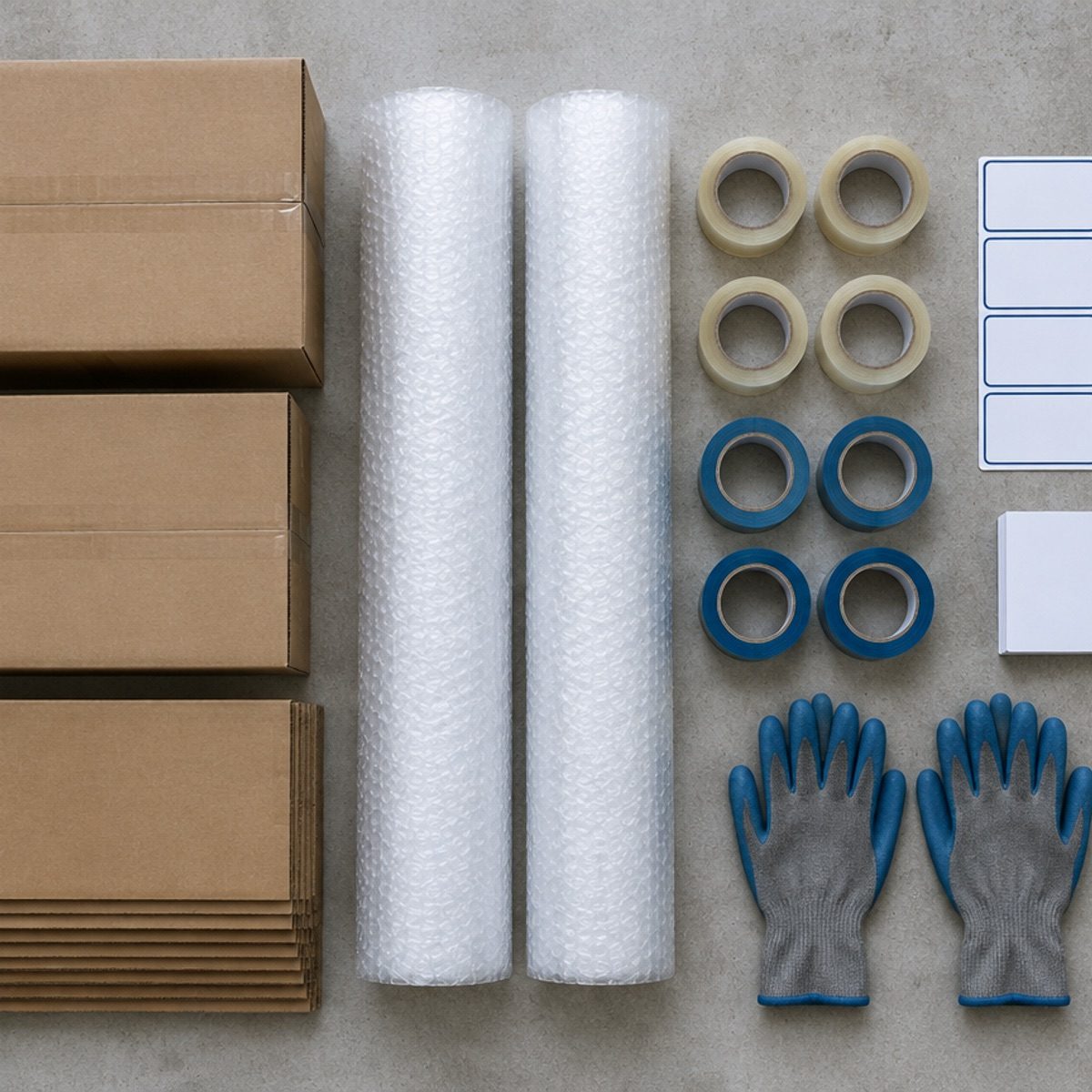
Every claim we settle for broken crockery has the same cause: plates stacked flat on top of each other, or a box that was filled to two-thirds and sealed anyway. Fix those two habits and breakage in a normal move drops to almost nothing.
The three materials that matter
Paper, not newspaper. Newsprint transfers ink onto anything damp. Clean newsprint-grade packing paper is what professional packers use, and it is cheap.
Cell separators. A divided carton with individual cells for glasses is the single most effective piece of packing equipment there is. One glass per cell, wrapped, with the cell filled.
Stretch film. For anything with drawers or doors — a chest of drawers, a crockery cabinet — film holds it shut so contents cannot slide out and so no small parts get lost.
Bubble wrap is useful for flat glass and frames. It is poor for crockery, because it compresses and lets items touch.
Plates: on edge, never flat
Stacked flat, a plate carries the weight of everything above it and every jolt travels straight through the stack. Packed on edge, each plate is supported by its rim and the load path runs through paper rather than ceramic.
Stand plates on edge in a sturdy carton, interleaved with paper, with the whole row packed tight enough that nothing shifts when you tilt the box. Fill any remaining gap with crumpled paper — a box that rattles when shaken is a box that will break something.
Glasses and cups
Wrap each one individually, then place it in a cell, mouth down where the shape allows. Do not nest glasses inside each other — the inner one expands under pressure and both crack. Do not put heavy mugs above glasses in the same carton.
Mark the carton "FRAGILE — THIS WAY UP" on two adjacent sides, not on the lid. Labels on the lid are invisible once boxes are stacked.
Mirrors, frames and flat glass
Tape an X across the glass face before wrapping. This is not superstition: if the pane does crack, the tape holds the pieces together instead of letting them fall into the box and cut something else.
Then wrap in bubble, then corrugate, and carry it on edge rather than flat. Flat glass carried flat flexes across its span, and glass that flexes breaks. On edge, it is rigid.
The last twenty metres
Most breakage happens between the door and the truck, not on the highway. Two people per heavy carton, one person per trip on stairs, and a clear path planned before anything is lifted.
In monsoon, that stretch is also wet. Keep a stack of dry cloth and lay a mat at the doorway — a damp carton loses most of its strength in minutes, and a wet box of crockery is a guaranteed claim.
What to keep in a "first night" box
One carton, packed last and loaded first, with what you need before anything is unpacked: two plates, two glasses, a knife, a phone charger, toilet paper, a towel, basic medicines and the kettle. It is not fragile packing, but it is the box that decides whether the first evening is pleasant or miserable.
If something does break
Photograph it in place, before moving anything, and note which carton it came from. A claim is straightforward with photographs and a packing list; without them it becomes a negotiation about whether the item was already damaged.
Keep the declared-value insurance documentation with the moving papers, not in a drawer that gets packed.

Key takeaways
- Plates packed on edge survive; plates stacked flat do not.
- One glass per cell, with the cell filled so nothing shifts.
- Tape an X across mirrors and frames before wrapping.
- Carry flat glass on edge, never flat.
- Most breakage happens between the door and the truck.
Frequently asked questions
How do I pack plates so they do not break?
Stand them on edge in a sturdy carton, interleaved with packing paper, packed tight enough that nothing shifts. Flat stacking transfers every jolt through the stack.
Is bubble wrap good for crockery?
It is better for flat glass and frames. For crockery it compresses under load, so items end up touching. Paper plus cell separators works better.
Should I use newspaper to wrap dishes?
Only as outer padding. Newsprint ink transfers onto damp ceramics and glass, and it is hard to remove. Use clean packing paper for anything that touches the item.
Transparent pricing
Featured AC services and rates
Published rates straight from the AK Aircon Services rate card — 13 categories covering service, installation, gas charging, repair, parts and material.
| Service | Split AC | Window AC |
|---|---|---|
| Dry / Lite service | ₹399 | ₹399 |
| Standard jet service | ₹549 | ₹549 |
| Foam jet service | ₹649 | ₹649 |
| Deep dismantle service | ₹1,349 | — |
| Inspection / diagnosis visit | ₹299 | — |
| Gas charging | ₹2,499 | — |
| Leakage repair | ₹1,499 | — |
| Standard installation | ₹1,499 | ₹1,499 |
| Uninstallation | ₹899 | ₹899 |
| Indoor unit shifting | ₹1,299 | — |
| PCB / electrical repair | ₹1,799 | — |
| Compressor replacement | ₹6,499 | — |
| Copper pipe (per metre) | ₹550 | ₹550 |
Prices include labour and material unless a note states otherwise. Installation material is extra. Units above 2.2 tons are quoted individually.
Need a specific price?
Tell us the unit type and the service. We confirm the exact charge before work starts.
See all 13 categoriesRates are transcribed from the AK Aircon Services rate card. Charges for unusual site conditions or non-standard equipment are confirmed before work begins.